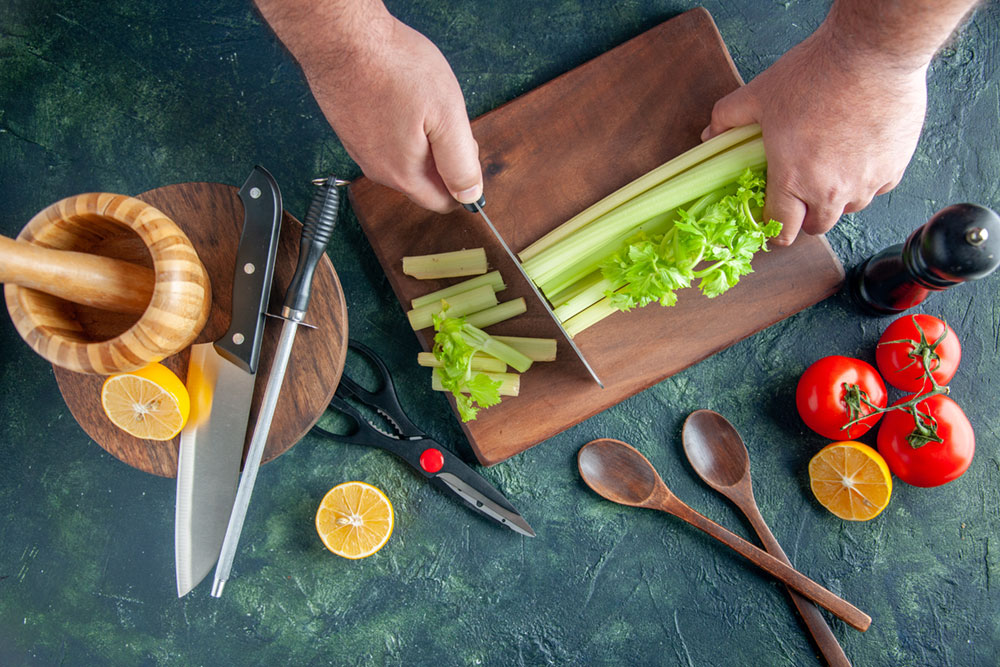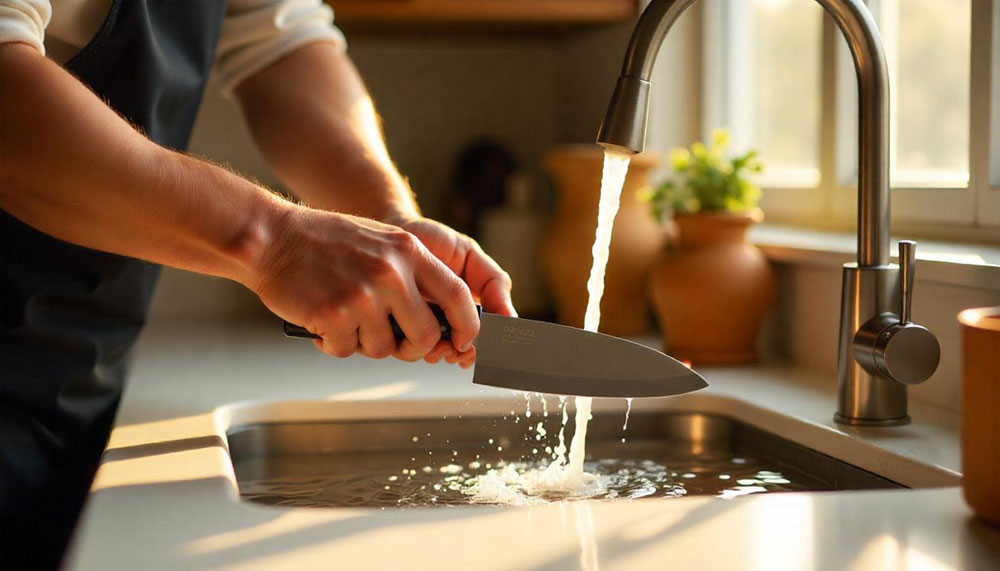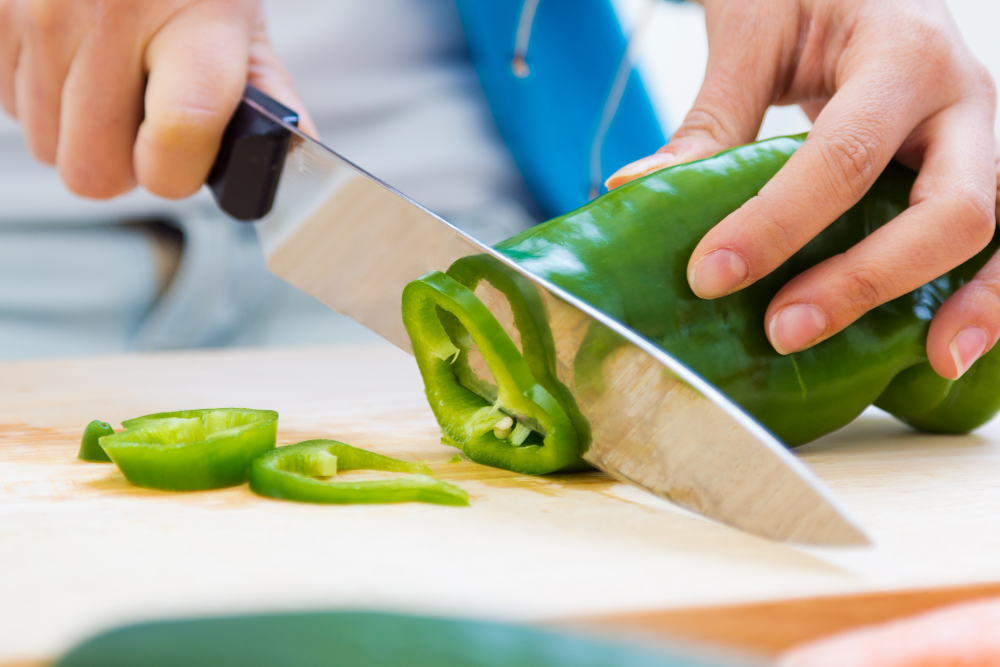
Of all the kitchen equipment you may use, knives are among the most important. They are what you use to cut, clean, peel, size, and shape all that goes into the dishes you are preparing. That’s why professional chefs have a set of knives they guard jealously and always carry with them when they travel for work. Most home cooks are also very protective of their knives because they know that a dull or damaged blade can affect the outcome of their efforts to create appetizing food. Sharpening knives makes cooking easier and helps to enhance the quality of food.
Being Dull is Not Nice
A knife, that is used in the right way, does not become dull overnight. The loss of sharpness is a gradual process and often a cook may not realize that a blade has lost its edge until one day they find that the food is not as good as it used to be. There are a few easy-to-spot signs that a knife has become dull.
- You cannot cut ingredients, especially vegetables, in one pass anymore. You now have to use a sawing motion to compensate for the lack of sharpness.
- Soft fruits and vegetables, like tomatoes get crushed when you cut them. The loss of sharpness means that more force has to be applied which will both squeeze the juice out of the fruits/vegetables and crush them.
- Instead of cutting using the blade, you have to use the point of the knife to make the initial incision. For example, when peeling a vegetable if the blade slides over the surface instead of getting under the skin and you have to use the point, the blade is dull.
- The sharper the knife, the less cutting force required. If you notice what you could cut with one hand now requires the pressure of both hands, the knife blade is dull.
Honing Versus Sharpening
There is a lot of confusion about honing and sharpening. In essence, honing is done to try and maintain the edge of the blade. Honing should be done regularly. You can use a honing steel every day if a knife is subject to heavy use. Honing can never completely protect the edge and even with the best care the edge will become dull and sharpening will be needed.
How Often?
How often you should sharpen your knives depends on how much you use them and how you care for them. Some people have a regular calendar-based sharpening schedule while others wait for the first sign of a dull edge and then get the sharpening done. According to a leading chef who was interviewed by Forbes, a knife should be sharpened 2 or 3 times a year. If you spend a lot of time in the kitchen and use your knives a lot, this may be right for you.
The Best Way to Know
If your knives are dull or if you are not sure if they need sharpening, the best thing to do is to send them for professional sharpening. When they come back, you will notice a significant improvement in the cutting. Note how easy it is and how little pressure is required. When you find that you need to put more pressure or the cutting is not as clean as it was, it’s time to get them sharpened again. You know your knives best, but 2 or 3 times a year could be a good frequency. A knife sharpening service that picks up the knives from your home, professionally sharpens them, and brings them back to you takes all the hassle out of the sharpening process and leaves you with blades as good as new.
Frequently Asked Questions
1. How often should I sharpen my kitchen knives?
Sharpen your knives 2 or 3 times a year, depending on usage. If you use them frequently, you may need to sharpen them more often.
2. How can I tell if my knife is dull?
Signs of a dull knife include needing more pressure to cut, using a sawing motion, or crushing soft fruits like tomatoes instead of slicing them cleanly.
3. What is the difference between honing and sharpening?
Honing helps maintain the edge of the blade and should be done regularly, while sharpening restores the sharpness and should be done 2 or 3 times a year.
4. Can honing replace sharpening?
No, honing can only maintain the edge for a while. Sharpening is necessary to restore the sharpness when the edge becomes dull.
5. Is it better to sharpen knives myself or use a professional service?
Professional sharpening is recommended to avoid damaging the blade and to achieve the best results. A professional service also takes the hassle out of the process.